Baseboard services cover new installation, replacement after flooring or remodeling, and integration with shoe molding and existing trim, each planned around the actual room.
New Baseboard Installation
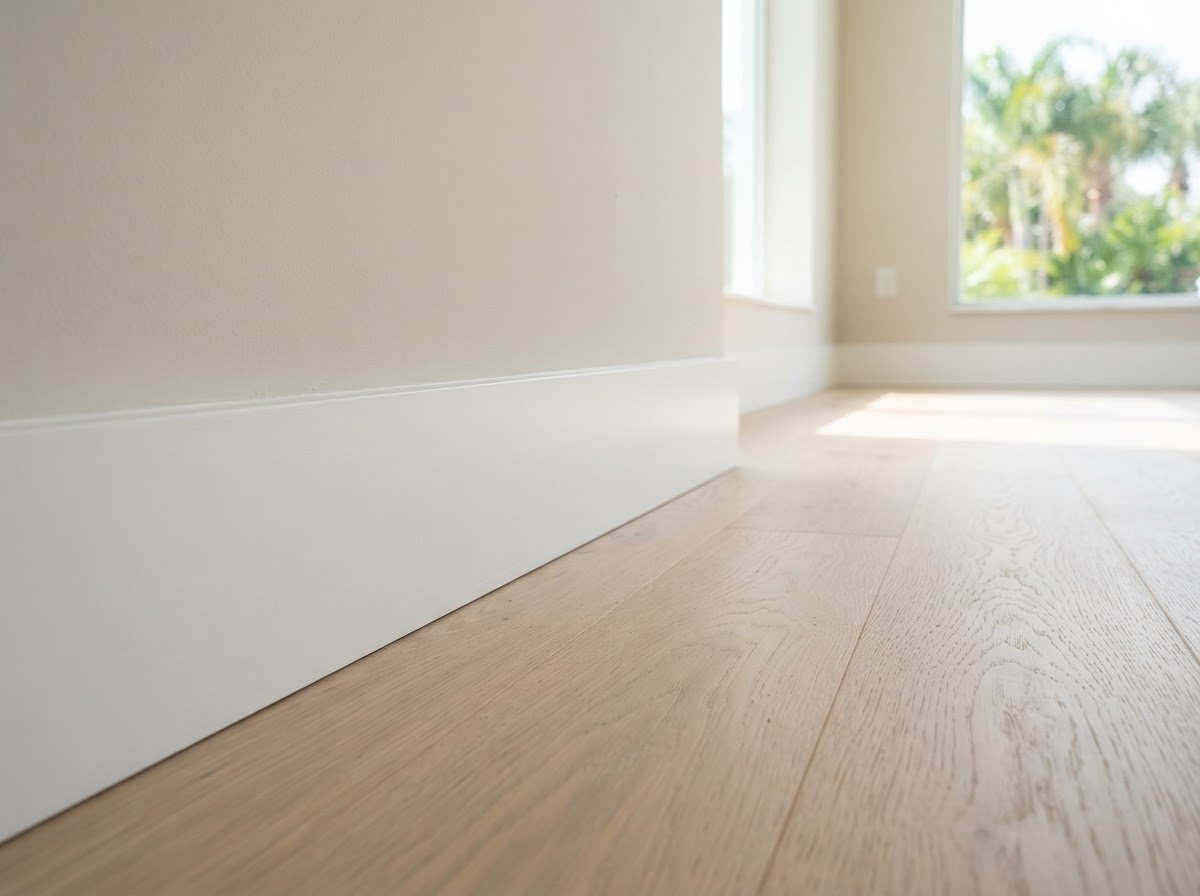
New baseboard installation creates a clean floor-to-wall transition for Bloomingdale homes that lack trim or want to add a more proportioned profile. This applies to living rooms, hallways, bedrooms, and any space where a finished perimeter improves the room.
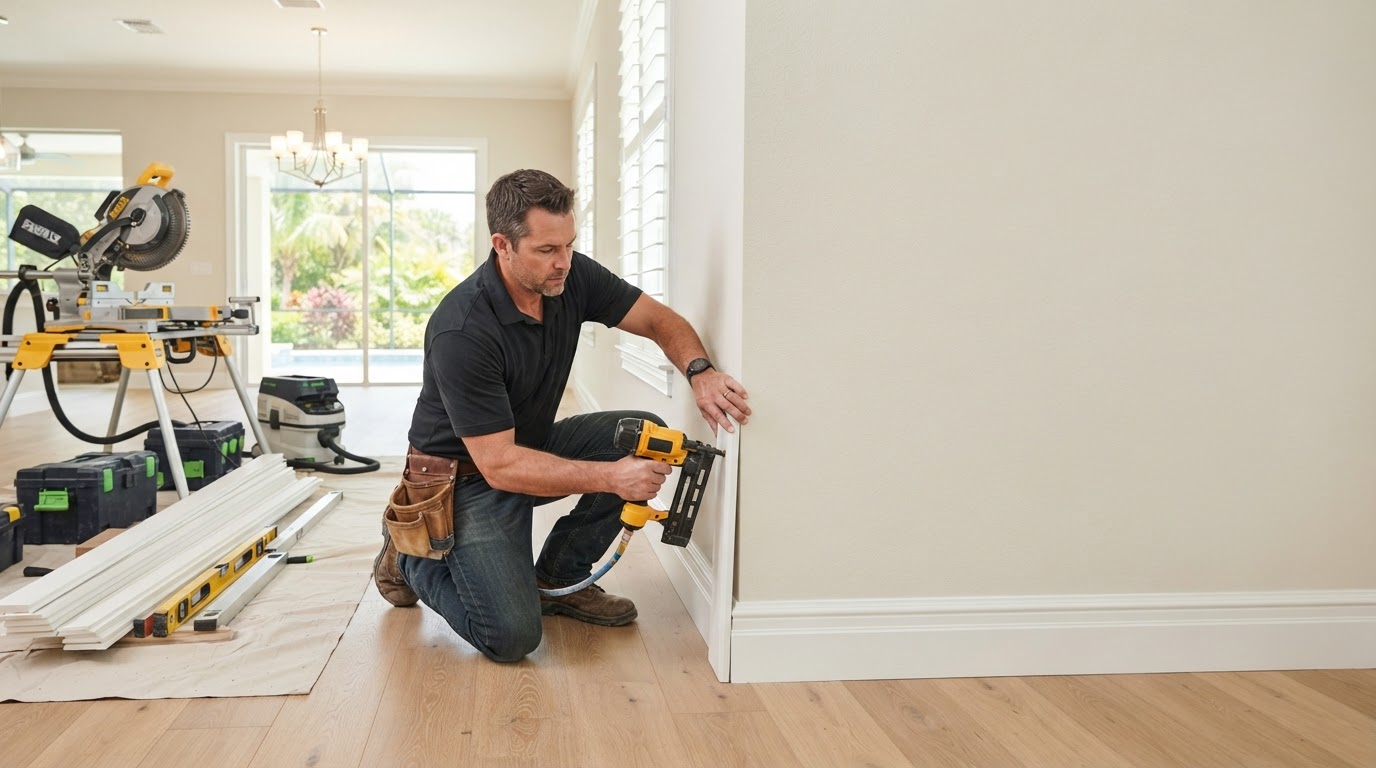
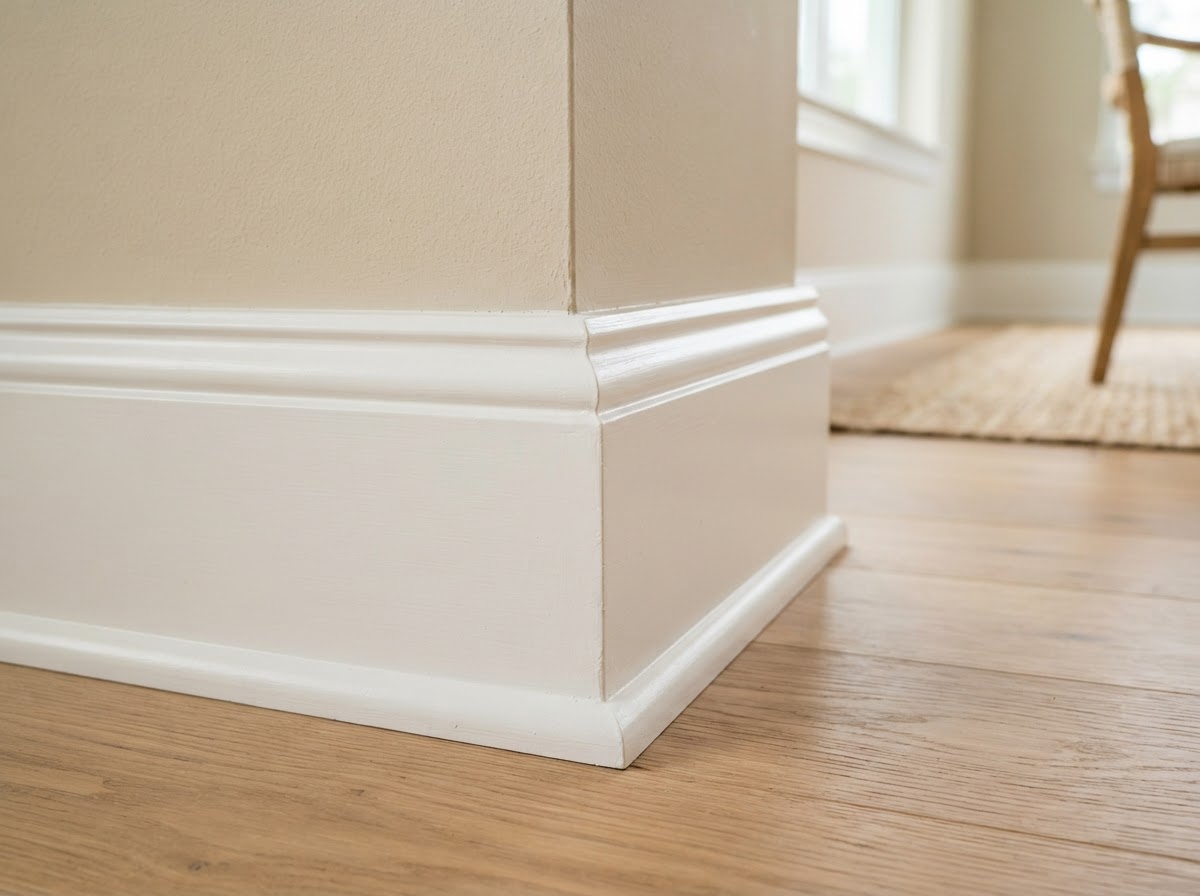
Installation uses a base profile selected for the room, with inside corners coped, outside corners mitered, scarf joints on long runs, returns at endpoints, finish nails, a compound miter saw, a finish nailer, and a laser level. Paint-grade MDF, pine, hardwood, or PVC are chosen for the finish and conditions.
The outcome is a clean floor-to-wall transition, with closed corner joints, hidden seams, and nail-hole filling and caulk lines that leave the baseboard finish-ready.
Baseboard Replacement After Flooring or Remodeling
Baseboard replacement swaps damaged, dated, or undersized trim for a new profile that fits the renovated room, which is common after flooring installation or remodeling. This applies to Bloomingdale homes where existing base no longer matches new floors or casing.
Replacement uses careful removal of existing trim, wall evaluation, a new profile selected for the room, coped inside corners, mitered outside corners, scarf joints, scribes where walls are irregular, finish nails, nail-hole filling, wood filler, and caulk lines. Removal and wall repair add labor beyond simple new installation.
The outcome is updated baseboard that aligns with the renovated room, with consistent reveals and a profile proportion that balances the floor and casing.
Baseboard, Shoe Molding, and Existing Trim Integration
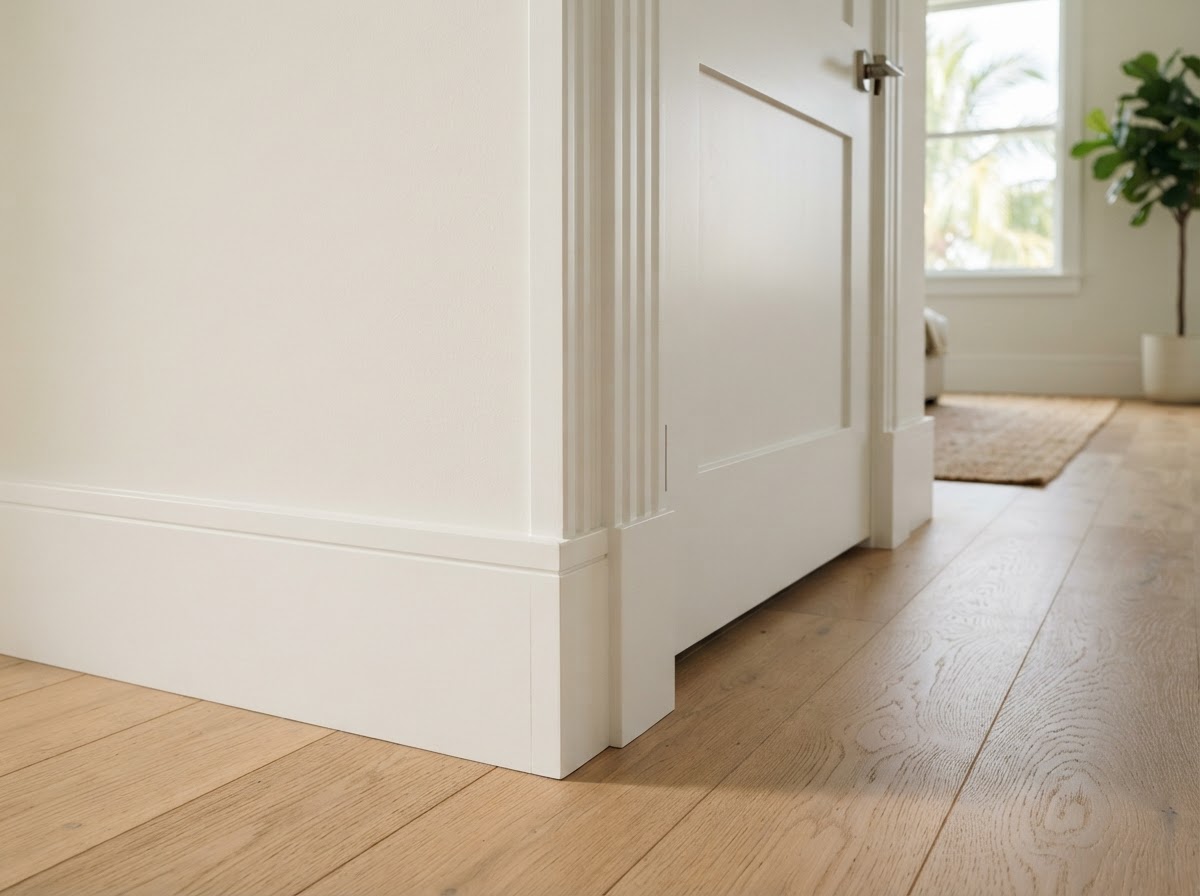
Baseboard integration connects new base to existing casing, shoe molding, and quarter round for Bloomingdale homes where the full perimeter trim should read as one system. This applies to rooms where flooring gaps or profile mismatches need to be closed.
Integration uses a base profile matched to existing casing, shoe molding or quarter round where floor gaps exist, coped and mitered corners, scarf joints, scribes, finish nails, nail-hole filling, and caulk lines. The existing trim condition is evaluated for compatibility.
The outcome is a consistent perimeter, with the base, shoe, and casing reading as coordinated trim rather than mismatched pieces.