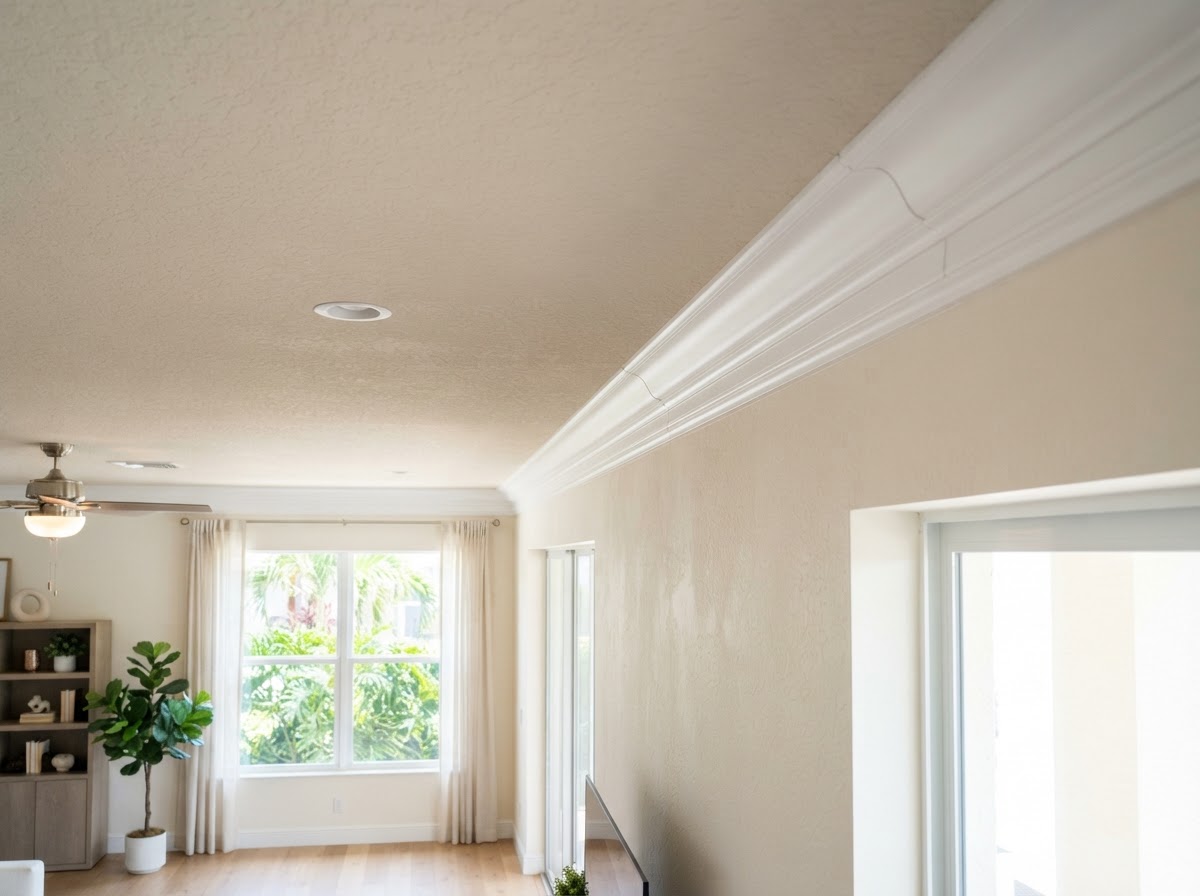
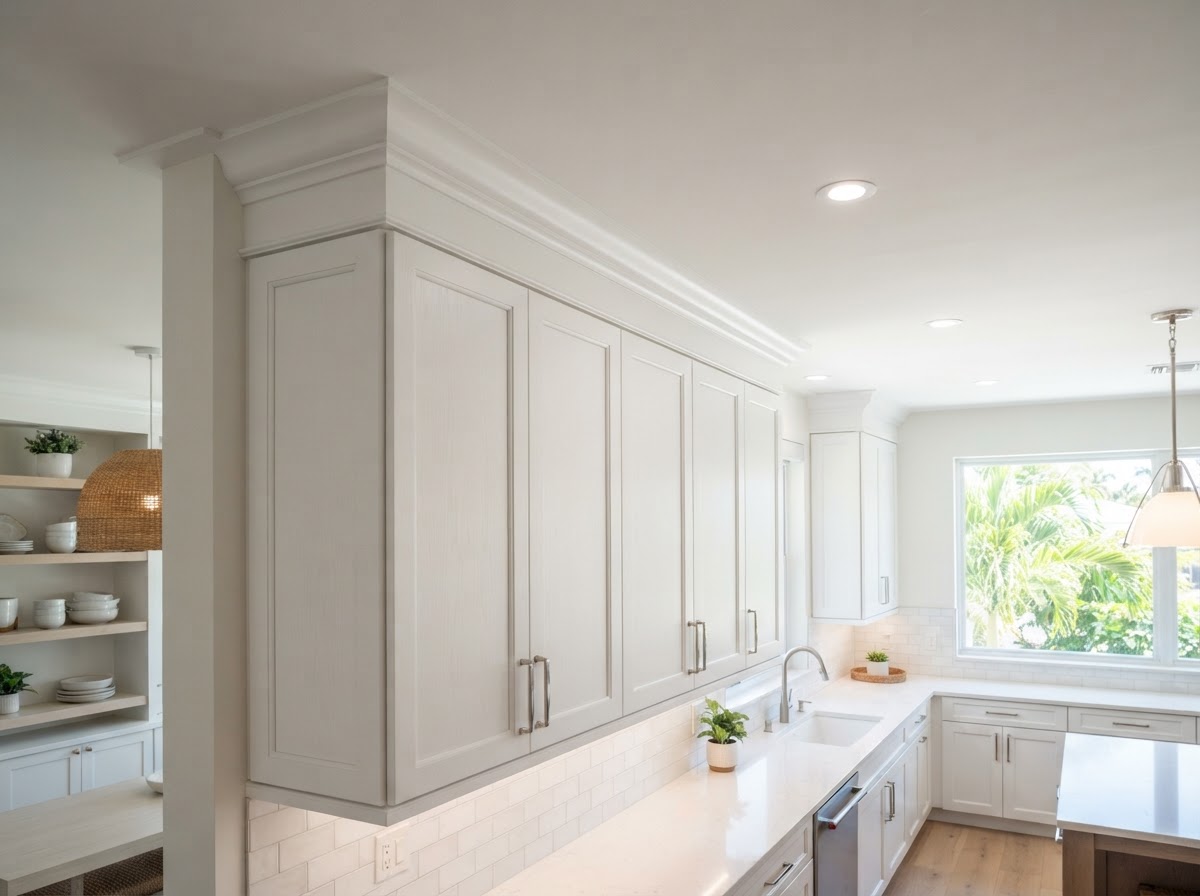
Crown molding services cover new installation, profile replacement and updates, and integration with cabinets and built-ins, each planned around the actual room.
New Crown Molding Installation
New crown molding installation creates a finished wall-to-ceiling transition for Bloomingdale homes that lack molding or want to add architectural detail. This applies to living rooms, dining rooms, bedrooms, and any space where a clean ceiling transition improves the room.
Installation uses a molding profile selected for the ceiling height and room proportion, with the spring angle set, inside corners coped, outside corners mitered, scarf joints on long runs, returns at endpoints, finish nails, a compound miter saw, a coping saw, and a laser level. Paint-grade MDF, pine, hardwood, or polyurethane are chosen for the finish and conditions.
The outcome is a clean wall-to-ceiling transition, with closed corner joints, hidden seams on long runs, and nail-hole filling and caulk lines that leave the molding finish-ready.
Crown Molding Replacement and Profile Updates
Crown molding replacement and profile updates swap damaged, dated, or undersized molding for a new profile that fits the renovated room. This applies to Bloomingdale homes where existing molding no longer matches new finishes, flooring, or trim proportions.
Replacement uses careful removal of existing molding, wall and ceiling evaluation, a new profile selected for the room, coped inside corners, mitered outside corners, scarf joints, scribes where walls are irregular, finish nails, nail-hole filling, and caulk lines. The new profile is matched to existing trim where relevant.
The outcome is updated molding that aligns with the renovated room, with consistent reveals and a profile proportion that balances the ceiling height.
Crown Molding Integration With Cabinets and Built-Ins
Crown molding integration connects cabinetry and built-ins to the ceiling for Bloomingdale homes where the cabinet top should meet the room's trim. This applies to kitchen cabinets, entertainment centers, and built-in bookcases where a clean top transition matters.
Integration uses a crown profile sized to the cabinet face frame and ceiling height, with scribes, fillers, cope and miter joints at corners, finish nails, and caulk lines at the ceiling transition. Short runs around cabinetry often require more fitting per foot than room perimeter molding.
The outcome is cabinetry that reads as part of the architecture, with the crown meeting the ceiling cleanly and consistent reveals across the cabinet top.